


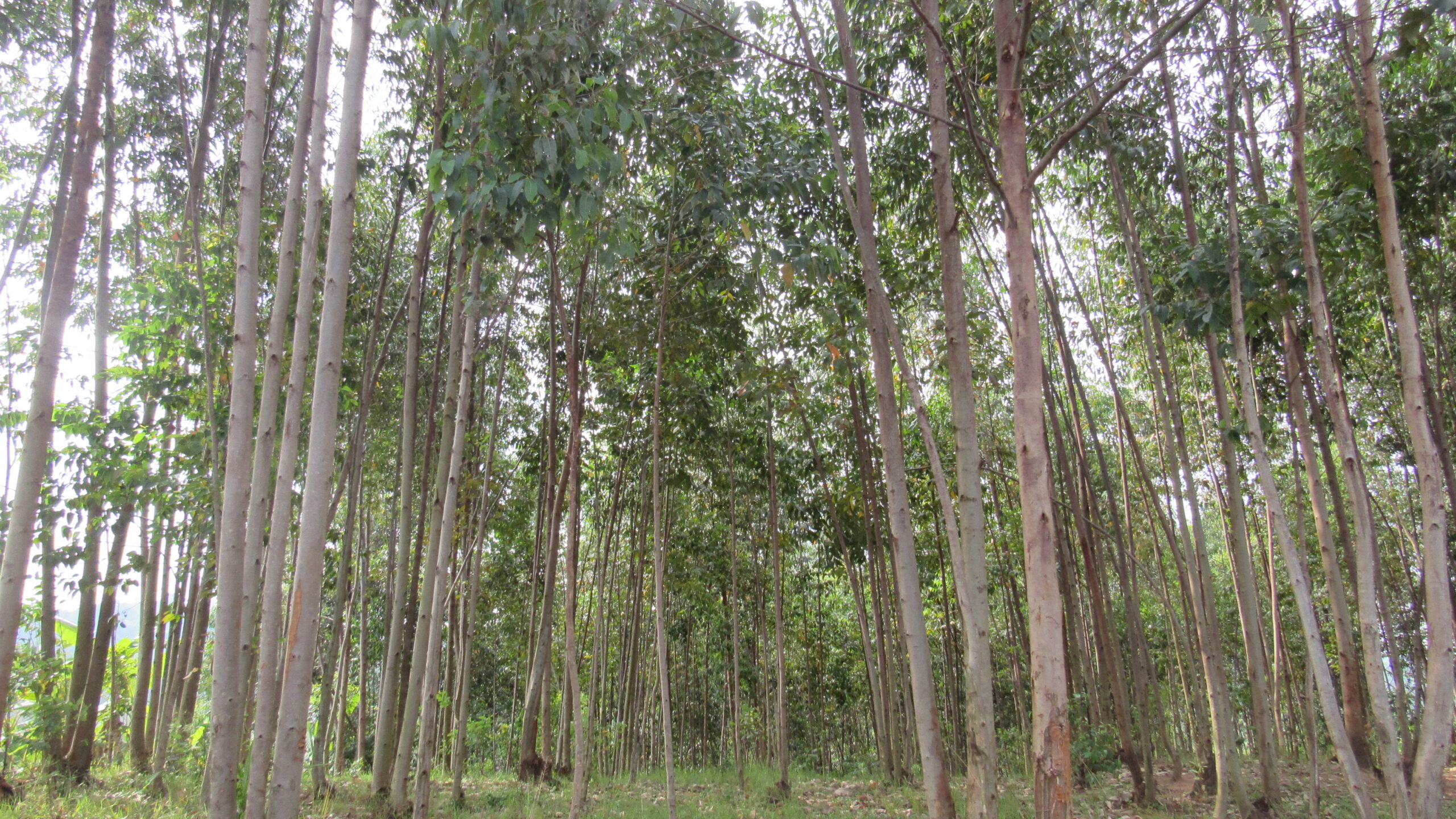
Despite the economic opportunities that eucalyptus offers, it can be harmful to the environment. Kayanza province is a case in point. Should we continue to spread eucalyptus throughout the country? Difficult to answer. Research and realities on the ground.
Eucalyptus is a ubiquitous tree in Burundi. It is spreading at the timber market and on farmers’ plantations, filling living rooms and bedrooms with furniture on which to sit and sleep. What’s more, it is one of the driving forces behind Burundian cuisine. Nevertheless, its expansion is not a recent phenomenon.
Originating in Australia, eucalyptus was introduced in Burundi during the colonial era in 1931 by the Belgians to compensate for the loss of natural forests threatened by the cutting of firewood. At the time, seven main eucalyptus species were introduced: E. camaldulensis, E. tereticornis, E. rudis, E. maïdenii, E. botryoides, E. robusta and E. resinifera.
According to Professor André Nduwimana, a forester at the University of Burundi, eucalyptus expanded in Burundi because it has shown the potential to multiply rapidly.

In his study 2023, the socio-economic and ecological impacts of eucalyptus stands in Burundi”, published in CIRAD, the researcher argues that it can mature in five years compared to mahogany like Pterocarpus tinctorius that take around a fifty years to be harvested.
“At the age of five, it can be harvested to produce charcoal, while from the age of 7, it can be sawn to produce planks,” he explains.
Moreover, its production is exceptional, reaching 60 m3 per hectare at the age of five and eight years in some parts of the country, which makes it possible to meet the growing needs felt.
Unlike other species that die after harvesting, eucalyptus shoots back. And most importantly, it is resistant to insect attack, » he points out.
Restoring forest cover
The qualities of eucalyptus have won over the reforester (the government) to such an extent that it has made it one of the preferred types for afforestation programs popularisation. Following in the footsteps of the Belgians, the government of Burundi launched a vast programme to restore the forest cover that had become extinct in the late 1970s. Until 1976, the area planted with eucalyptus trees in Burundi was approximately 25,000 hectares.
Reforestation efforts increased forest cover from 3% in 1978 to 8% in 1992. Eucalyptus was the main species to be reforested, » says Prof. Nduwimana. More than half of eucalyptus planted were E. maïdenii, he adds.
During three consecutive forestry seasons (2019-2020; 2020-2021 and 2021-2022) of the Ewe Burundi Urambaye Programme, eucalyptus seedlings also represent more than 60% of the seedlings produced in Burundi’s 17 rural provinces.
In the Burundi Landscape Restoration and Resilience Project (PRRPB), the proportion of eucalyptus seedlings produced for the 2021-2022 forestry season exceeds 50%.
Currently, it is the eucalyptus grandis and eucalyptus saligna species that are in demand because of their rapid growth and the quality of the wood, mainly for poles and sawn timber, » says Professor Nduwimana.
Forest cover in Burundi represents around 10.8% of the land area, of which around half is planted forest, » he says, quoting the OBPE (Office burundais pour la Protection de l’environnement).
Wealth creator
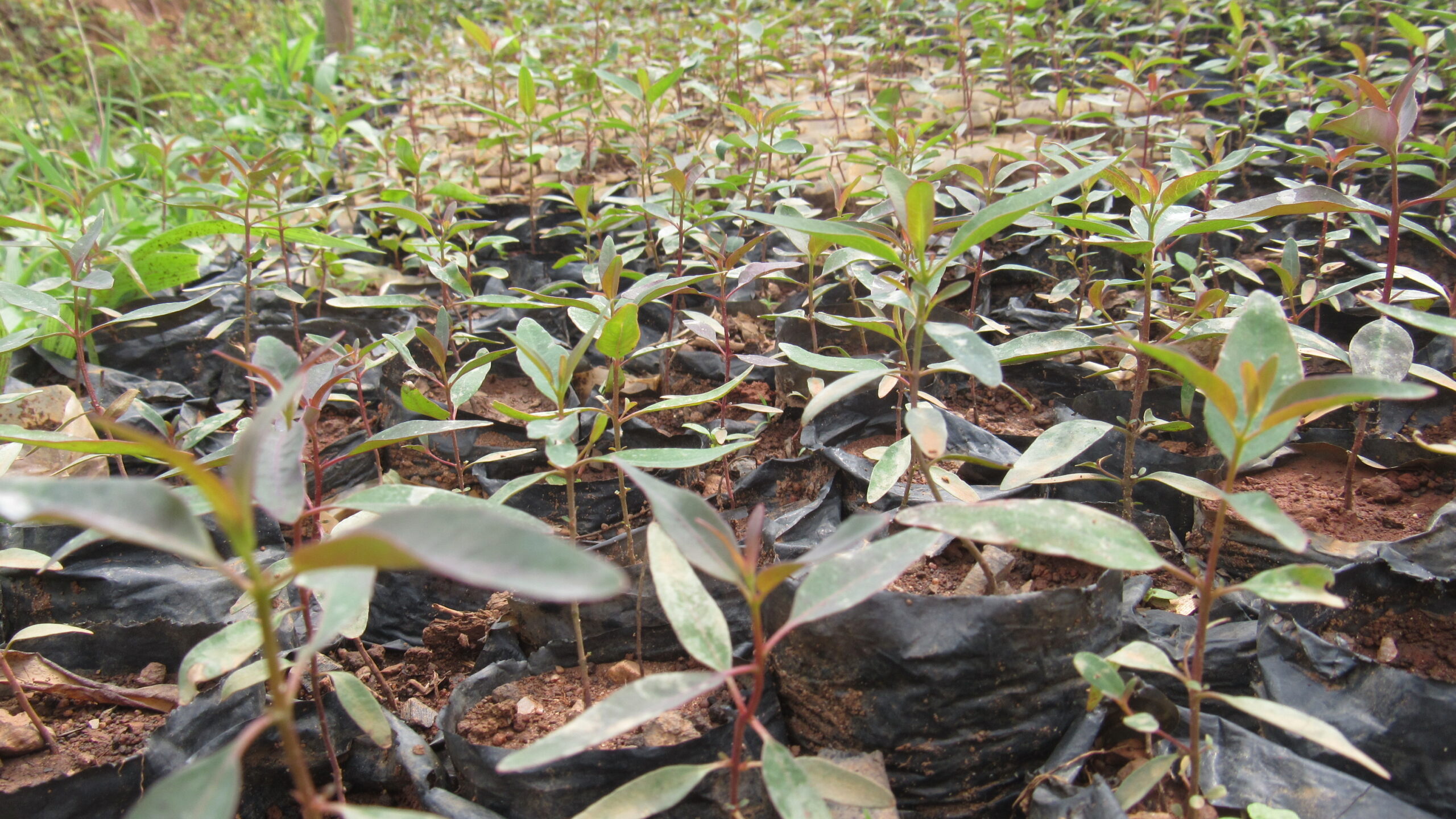
Its qualities have also attracted tree farmers. As a result, they have expanded them on their own plots. Victor Bucumi has been growing eucalyptus plants on his Gihororo hill for over ten years. Its services are much in demand in the communes of Gatara and Matongo in the province of Kayanza. He also plants them. « Each eucalyptus plant costs 250 BIF. Here, I hire the day labourers who carry the tree seedlings to the fields on their heads or on bicycles and help me with the planting, » he explains.
In Kayanza, a province in the north of the country, around 110km from Bujumbura, the economic capital, farmers have eucalyptus plantations as extensive as their food crops.
Victor Bucumi, a tree farmer on the Gihororo hill in the commune of Gatara in Kayanza province, says: ‘Only farmers who have little or no land do not grow eucalyptus.
Each year, Bucumi produces between 10 and 20 thousand eucalyptus plants, which means that farmers are continuing to increase their plantations. Demand grows as the years go by. Given the demand, I plan to double the number of eucalyptus plants, God willing, » he says..
Arboriculture is a very lucrative profession. According to Victor Bucumi, a tree plantation of 1,500 eucalyptus trees is worth around 20 million Bif, or more than $6,000. He adds that ‘eucalyptus is an inexhaustible source of money’.
What if eucalyptus replaced coffee?
In the past, farmers in Burundi earned a lot of money from the sale of parchment coffee. They could then buy valuable goods such as cows, metal sheeting, etc. Things have changed now. It’s only after the sale of the eucalyptus plantations that they can earn more than 2 million in one go, so they can afford valuable goods », says Désiré Twizerimana, the local manager of the Office burundais pour la protection de l’environnement (OBPE) in Gatara.
In Kayanza, eucalyptus is replacing coffee. ‘I uprooted one row of my coffee plantation a year and replaced it with another row of eucalyptus plants until the whole coffee plantation disappeared and was replaced by a eucalyptus plantation’, says farmer Minani.
According to Pr Nduwimana, this choice can be explained by the fact that coffee today requires a lot of work, while bringing little profit to the farmer.
As for the economist André Nikwigize, the price of a kilo of coffee of FBu 2,800, or around $1 offered to the producer, is insignificant given the price offered on the international markets (US$6.8/kilo on the New York market) and the level of inflation (+40%).
At the same time, Burundi’s neighbours offer better prices. Nikwigize gives the example of Tanzania, where coffee growers receive between $2.5 and $4.5 per kilogram of Arabica coffee, Rwanda, where they receive $3.2, and Uganda, where they earn $2.9 per kilogram. For him, when the price offered is low, supply also falls.
The arduous nature of coffee-growing, the long maturation period of a coffee tree (3 to 4 years), the costs of maintenance, fertilisers, pesticides and monitoring coffee trees, harvesting, hulling and drying coffee, and the mobilisation of the whole family or workforce mean that farmers would gain more by using their small plot of land for eucalyptus plantations, which would yield much more, and in a very short time, than coffee growing.
Meanwhile, Nduwimana points out that eucalyptus requires no maintenance once it has been planted. It yields relatively more, especially sawn timber. It doesn’t require intermediaries to sell it, and it rejects waste once it’s cut.
And perceptions change too. Whereas in rural areas a man’s wealth used to be measured by the number of head of cattle or coffee plantations he owned, now it’s measured by the number of eucalyptus forests, » he reveals.
Despite all this, there is no real wood processing industry in Burundi. Most logs, whether for sawing or charcoal-making, are processed by hand, » observes Nduwimana.
Products derived from eucalyptus, such as charcoal and boards, which are widely used in cooking, carpentry and construction, are heading for other provinces, notably Bujumbura, the economic capital.
At Burundi’s main timber sales and supply market, the Jabe market, some porters unload planks onto trucks, while others stack them in mountains of planks. Located around 4km from Bujumbura city centre, Jabe receives tonnes of processed and unprocessed wood every day. Dealers sell huge quantities of simple, modern and luxury furniture, including lounges, doors, windows and more.
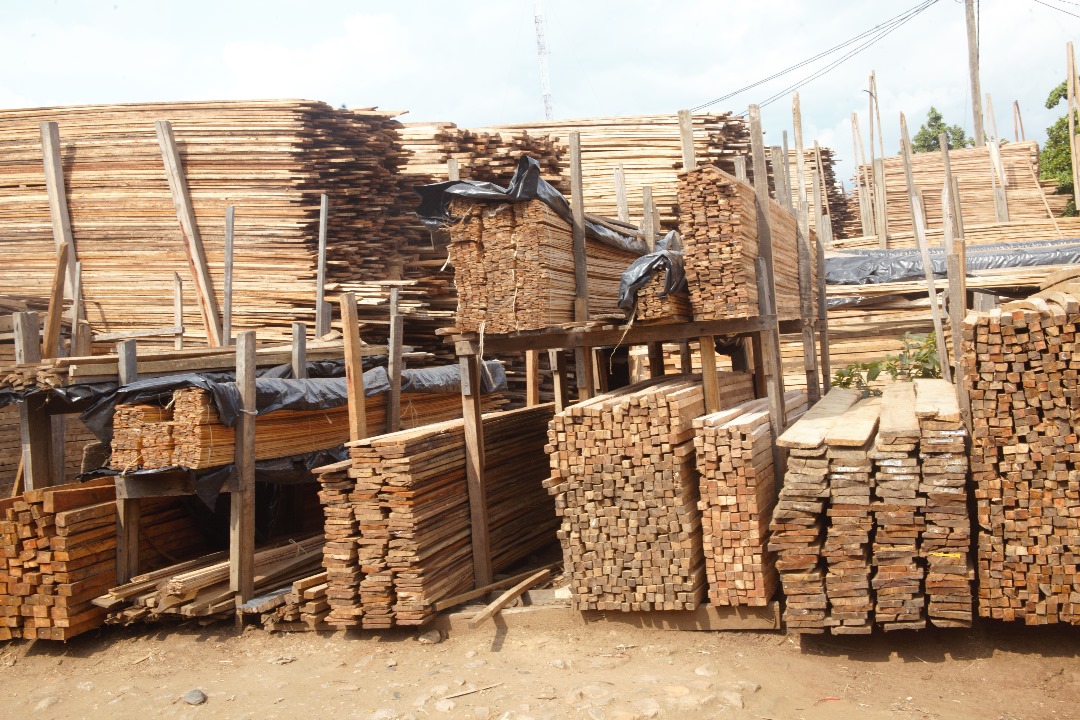
According to Juvénal Bigirimana, a plank retailer, Jabe is home to different types of planks, including eucalyptus and grevillea planks. However, he points out that eucalyptus boards are in the majority. « Almost all furniture is made from eucalyptus. Eucalyptus is a supplier of materials and a source of jobs here, » he comments.
Three kilometres from the Jabe market, at the Mutanga Nord furniture market, commonly known as “Kukabasazi”, located close to the Ntahangwa river, the traders try to attract customers to their workshops, each in their own way.
While the retailers display their models of tables, living rooms, wardrobes, etc., the roar of engines, the sound of hand saws and hammer blows echo alternately or simultaneously through the workshops.
According to Juvénal Havyarimana, a furniture dealer, « most of the objects/furniture on display are made from eucalyptus wood. If it weren’t for eucalyptus wood, furniture would be rare, expensive and unaffordable. We’d be out of work. We can’t imagine our work without eucalyptus wood.
Prof. Nduwimana says that of the 34 sites selling boards and planks visited in his above-mentioned study, eucalyptus boards and planks are sold at more than 70% of the sites and account for around 90% of the total quantity sold.
Eucalyptus takes the lion’s share of charcoal sales. ‘Almost all these bags of charcoal are made from eucalyptus’, says Chantal Niyuhire, a charcoal retailer based in the Nyakabiga district, in the urban commune of Mukaza.
During our visit, Emelyne Nikuze, a woman in her thirties, who had come to stock up on charcoal, asked her supplier if he kept eucalyptus charcoal in stock for her order. According to Nikuze, eucalyptus charcoal is strong and hard on the brazier.
Its calorific value is higher than that of most other local species: « Plantation-grown Eucalyptus has a high calorific value of 4,700 to 4,800 kcal/kg of dry wood. It produces charcoal of good marketable quality, with twice the calorific value of dry wood and indefinite shelf life », expains Pr Nduwimana.
The study also points out that of the 52 main charcoal sales sites visited in Bujumbura, more than 70% sell eucalyptus charcoal, and eucalyptus accounts for around 90% of the stock sold.
In Burundi, over 95% of the population use wood for cooking. With eucalyptus, this demand can be reduced by up to 90%. « If it hadn’t been for eucalyptus, we wouldn’t even have the relics of protected areas that we have today. The Burundians would have rushed to the protected areas, which would already have disappeared, » reckons Nduwimana.
Farmers cite other uses for eucalyptus, such as supporting beans, making handles for hoes and shovels, etc. It is also used in construction. It is useful for a number of social activities, » points out Désiré Twizerimana.
Nevertheless, all tree cutting is subject to the issue of a cutting permit, » explains Twizerimana, citing the 2016 forestry code. This code stipulates, notably, that the issuance of a cutting permit is conditional on the prior payment of the wood-cutting authorisation fee.
In addition, timber pays transport taxes at all the OBPE barriers set up at all the entrances to the city of Bujumbura. These taxes are paid into the state coffers, » adds the environment official.
Taxes also contribute to the economic development of society, of the municipality in particular and of the country in general, » he adds. However, their contribution to economic growth (or Gross Domestic Product) is still low (around 2%).
Improving the daily life of arboriculturists.
Planting and manufacturing eucalyptus helps to improve rural and urban life. » By planting trees, I bought a plot of land where I maintain a plantation of 1,500 eucalyptus seedlings worth BIF 20 million when they reach maturity. I also provide for my family. My children go to school without me going into debt », says Bucumi.
He believes that arboriculture enriches those who practise it, because the market is guaranteed. ‘Have you ever seen where the boards have been thrown away? » he asks.
The carpenters are equally effusive in their praise. « Thanks to eucalyptus, we never run out of furniture-making materials, and we always have something to do. It helps us meet our family needs, » says Juvénal Havyarimana with pride.
« When you’ve formed a family, even if you’ve incurred debts here and there, you pay them back without any difficulty. They offer you money even before the eucalyptus wood is mature », adds Bucumi.
From planting to harvesting, eucalyptus creates many jobs. « At harvest time, local people earn their living either by sawing or by carbonising the charcoal in the kilns. After processing, it’s the turn of the drivers, the porters, the people who load and unload the lorries at their destination, etc. to make a profit, » he explains.
Désiré Twizerimana confirms that the local population grows eucalyptus to improve their living conditions.
Kayanza raises questions
Its economic importance has also led arboriculturists to plant large numbers of eucalyptus trees in the valleys, in wetlands and near watercourses, on hillsides, in fields, on slopes and on rocky ground, and so on. Unfortunately, there is both a downside and an upside.
There have been reports of water sources and wetlands drying up.
Pr Nduwimana gives the example of the drying up of a source of drinking water and crop irrigation in the Ruhororo locality in 2018, located between the Murago and Gihororo hills in the Gatara commune.
« So far, only the abandoned buildings trace Ruhororo. We tried to restore the water source by uprooting the nearby eucalyptus plants and replacing them with banana plantations, but it was too late. The water source was never restored. The same thing happened with the water source in the Murago valley », says Victor Bucumi.

« Poor practice in planting eucalyptus trees in areas close to watercourses is likely to cause springs and watercourses to dry up and dry out, because eucalyptus trees pump a lot of water. Imagine a tree species that can pump and evaporate over 200 litres of water per hour. That’s enormous », explains André Nduwimana.
This researcher points out that ‘the regions most susceptible to drying out are those with water deficits, because eucalyptus seeks water deep down, accentuating water deficiencies and causing the environment to dry out’.
And to clarify. « Its characteristic of being a water-consuming species does not change with the environment, but the extent of its impact depends on the environment in which it is planted.
Also according to André Nduwimana, the hill and plateau regions, or the low-lying areas on the slopes of these hills, are areas where springs can dry up.
Because of its excessive water consumption, eucalyptus is even used in certain situations to dry out excessively damp environments, he adds.
Professor Nduwimana continues: « Eucalyptus is not only accused of consuming a lot of water, but also of having harmful effects on biodiversity by preventing the development of animals such as insects and birds through the natural oils it releases.
Its effects have recently given rise to debate between tree farmers and extension services. In fact, in 2018, concerns about the environmental effects prompted the agricultural extension services and the administration to forcefully demand that eucalyptus plants located less than 15 m from watercourses be uprooted and replaced with native species, says Pr Nduwimana.
However, this decision was not well received and was even silently opposed in practice by Burundian farmers. « They cut down the eucalyptus trees without uprooting the stumps. This didn’t produce any convincing results, because the stumps rejected other eucalyptus plants. Today, the eucalyptus forests have expanded even further, » he points out.
Its socio-economic contribution to family wealth has led tree farmers to protect the eucalyptus from the reforestation service, » notes Nduwimana.
A dilemma
The eucalyptus dilemma, where it is difficult to position oneself in relation to the ecological challenges and its economic importance, is experienced just about everywhere in the world.
From Burundi to Senegal, via Spain, we have seen environmentalists decry the negative effects of eucalyptus on the environment, while ignoring its socio-economic importance for the local communities that grow it, » explains Pr Nduwimana.
According to Prof. Nduwimana, we cannot protect the environment by focusing solely on conservation without taking into account the needs of the population. Pr Nduwimana believes that we need to look at the overall complementarity between the environment, the social dimension and the economy, which is a sine qua non for sustainable development.
‘Conservation must contribute to sustainable development, because they are intimately linked,’ he observes.
Should we be worried?
According to Professor André Nduwimana, we should be concerned about eucalyptus plantations when they are badly done. But we shouldn’t cry disaster, because these are effects that can be corrected. And we need to propose ways of correcting them. In terms of gross water consumption, eucalyptus far outstrips other species. But in terms of efficiency, eucalyptus also outperforms other species, because it produces more per unit of water consumed. It’s like comparing a goat to a cow in terms of gross water consumption.
Eucalyptus has a high dry matter production. The more water there is, the more the plant will tend to pump out. The speed of growth will not be the same in marshes where there is a lot of water and on hilltops where the tree has to search for it.
After just three years, the eucalyptus will have reached maturity on the marshes, whereas on the hilltops it takes longer.
Eucalyptus tolerates difficult conditions and can grow and produce in conditions where other species cannot. Professor Nduwimana recommends mastering the ecology of eucalyptus.
For this researcher, eucalyptus should not be clear-cut when there are no other species to replace it, as this could result in bare areas. Cutting down eucalyptus trees and leaving bare ground? Will we have contributed to conservation? Instead, we will have contributed to making the environment that was more or less protected by the eucalyptus worse, » he replies. For him, attacking the eucalyptus is not the same as solving the water problem.
Some environmentalists recommend cutting down eucalyptus trees, forgetting that eucalyptus plantations combat erosion, protect bare soil and help form soil for rocky ground thanks to their long roots.
A necessary evil
Professor André Nduwimana concludes that we must take advantage of the positive effects of eucalyptus and try to minimise the negative effects.
Eucalyptus seems to be a necessary evil for Burundi. Although it creates many problems, it also solves many of them.
To minimise the negative effects, you need to know where to plant eucalyptus. It is recommended where the soil is not very fertile or used by the population. Planting it on mountain tops and steep slopes would help to combat erosion.
He also recommends planting eucalyptus in areas where other species have been unable to develop, such as on hilltops, and keeping them away from springs, watercourses and wetlands.
If the eucalyptus is planted in a relatively fertile area, try to space it out to allow other species to develop in the eucalyptus woods.
Alternatively, they should use mixed tree species, i.e. mix eucalyptus with other species such as acacia. This will encourage the development of biodiversity.
This story has been produced in partnership with InfoNile and with funding from JRS Biodiversity Foundation and IHE Delft’s Water and Development Partnership Programme. It’s a collaborative effort between journalist(s) and scientist(s), specifically Arthur Bizimana and Pr André Nduwimana. Professor André Nduwimana is a lecturer and researcher at the University of Burundi.